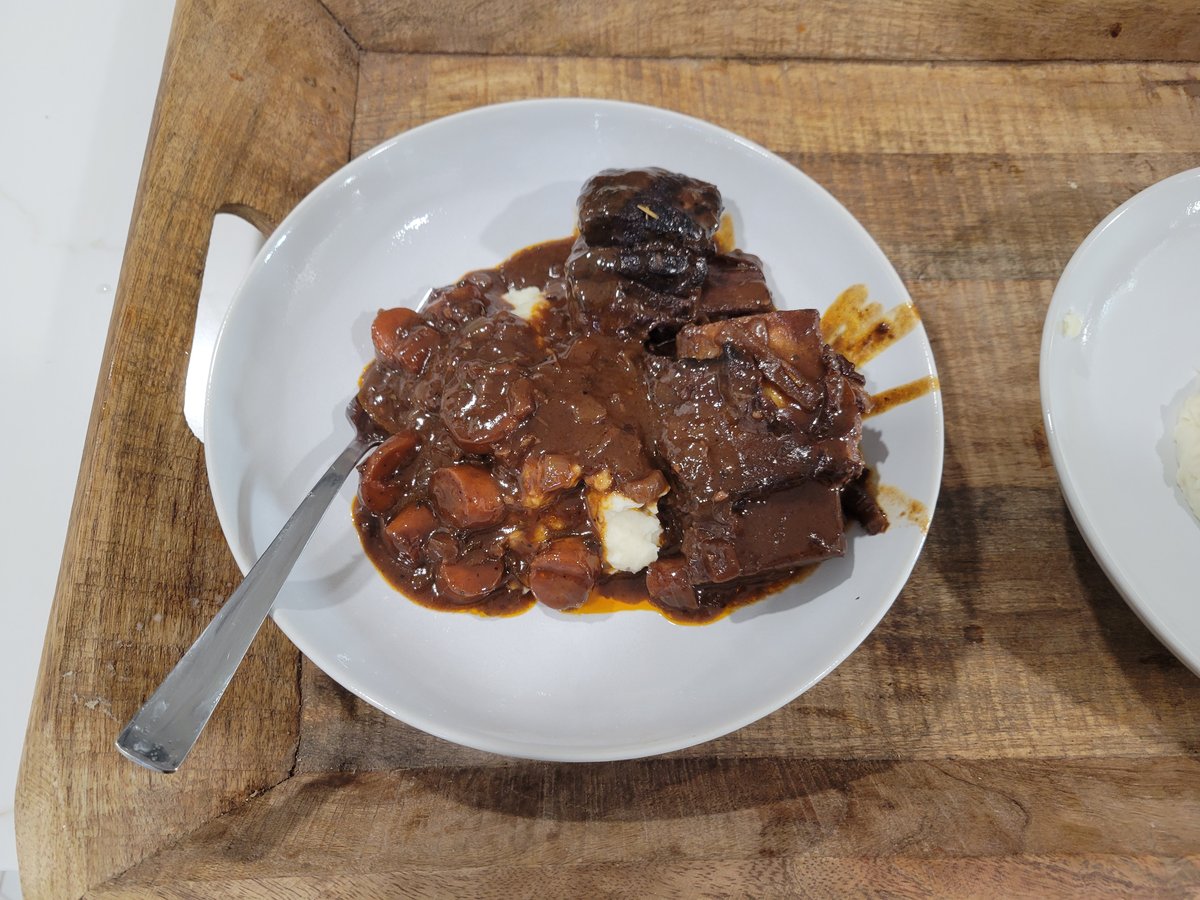
We had this at a fancy restaurant once. You know the type—dim lighting, cloth napkins, a waiter who introduces himself by first name like you're going to be friends. The short ribs came out looking like they belonged in a magazine, meat falling off the bone, swimming in this rich, wine-dark sauce. I'm sitting there thinking "this probably took a team of culinary school graduates all day to make" when my wife looks at me and says, "I think you could make this."
Challenge accepted.
Turns out? She was right. Braised short ribs aren't difficult. They're not even complicated. They just take time—most of which is the oven doing all the work while you do literally anything else. The technique is straightforward: sear the meat, build a sauce, braise it low and slow until the collagen breaks down and everything becomes impossibly tender. It sounds fancy because restaurants charge $40 for it. But you can make it at home for the cost of some ribs and a bottle of wine (minus however much of that wine you drink during the cooking process, which is your business).
Prep: 30 minCook: 2.5-3 hoursServes: 6Difficulty: Intermediate (but easier than it looks)
The $40 restaurant dish you just made for the cost of some ribs and a bottle of wine you were going to drink anyway.
Ingredients
The Main Event
The Aromatics
Instructions
Prep work first. Preheat your oven to 350°F. Chop your onions and carrots before you do anything else—once you start searing meat, things move fast and you don't want to be chopping vegetables while your fond burns. Get everything measured and within reach.
Season the ribs. Pat the short ribs dry with paper towels (wet meat doesn't sear, it steams). Season generously on all sides with salt and pepper. Don't be shy—there's a lot of meat here and you need the seasoning to penetrate.
Get the Dutch oven hot. And yes, it needs to be a Dutch oven. This is not negotiable. You need something that can go from stovetop to oven, hold five pounds of meat, and maintain heat while searing. Add enough vegetable oil to coat the bottom and heat over medium-high until the oil is shimmering and almost smoking.
Sear the ribs in batches. Don't crowd the pot—if you add all the ribs at once, the temperature drops and you'll steam the meat instead of searing it. Work in batches, searing each rib for 3-4 minutes per side until you get a deep brown crust. This is where the flavor lives. Don't rush it. Transfer seared ribs to a plate and repeat until they're all done.
Keep the drippings. Do NOT dump out the oil and drippings. I know it looks messy. I know there's probably some burned bits stuck to the bottom. That's flavor. That's fond. That's the foundation of your sauce. Leave it.
Cook the vegetables. Add the onions and carrots to the pot. Cook for a few minutes, stirring occasionally, until they start to soften and pick up some color. The moisture from the vegetables will start to lift some of those stuck bits from the bottom. Good.
Add the tomato paste and flour. Add the tomato paste and stir it in, cooking for about a minute until it darkens slightly. Then add the flour and stir vigorously to coat the vegetables. This is building your roux, which will thicken the sauce later.
Deglaze with wine. By now, you've probably burned some shit to the bottom of the pot. That's okay. That's what the wine is for. But first—take a swig from the bottle. This step is mandatory. Then pour in the entire bottle of wine. I'm pretty sure "deglaze" is French for "clean the bottom of the pan with wine." Use a wooden spoon to scrape up all those browned bits. They're dissolving into your sauce now. This is the magic.
Reduce the wine. Turn the heat down to medium so you don't boil off all the wine before it has a chance to do its job. Add the thyme, rosemary, oregano, and bay leaves. Add a bit more salt and pepper. Add the short ribs back to the pot, nestling them into the liquid. Let the wine reduce by about half—this concentrates the flavor and cooks off some of the alcohol. Takes about 10-15 minutes.
Add the beef stock. Pour in the quart of beef stock. The liquid should come about two-thirds of the way up the ribs—you're braising, not drowning. If it's too high, that's okay. If it seems too low, add a splash more stock or water.
Braise in the oven. Cover the Dutch oven with its lid and transfer to your preheated oven. Now walk away. Go watch a movie. Take a nap. Do literally anything else for 2 hours. The oven does all the work from here. The collagen in the meat slowly breaks down, the sauce reduces and intensifies, and everything becomes impossibly tender.
Check for doneness. After 2 hours, check the ribs. The meat should be fall-off-the-bone tender—you should be able to easily slide a fork into it with no resistance. If it's not there yet, cover it back up and give it another 30 minutes. Every oven is different. Every batch of ribs is different. Use your judgment.
Serve and accept praise. Serve the ribs over mashed potatoes, polenta, or whatever starch will soak up that incredible sauce. Spoon plenty of sauce and vegetables over the top. Try to act humble when people ask if you went to culinary school. You didn't. You just followed directions and let time do the work.
Notes
On the tomato paste situation: Why don't they sell tomato paste by the tablespoon? This is a question that has haunted home cooks for generations. You need three tablespoons. The can has like twelve. The rest will sit in your fridge slowly growing fuzz until you throw it away during a guilt-induced cleaning spree. You can freeze leftover tomato paste in tablespoon-sized blobs on a sheet pan if you want to be that organized. I've never once done this. I just accept the waste and move on.
On the wine: Use something you'd actually drink. "Cooking wine" from the grocery store is salty garbage. A $10-15 bottle of Cabernet or Merlot is perfect. You'll use most of the bottle in the recipe and drink the rest while cooking. This is the way.
Make it ahead: Braised short ribs are actually better the next day. The flavors meld, the sauce thickens in the fridge, and you can easily skim off any fat that solidifies on top. Make it Saturday, reheat Sunday. Impress everyone with zero day-of effort.
Fancy restaurant secret: That restaurant charged $40 for this dish. Your cost is maybe $30-40 for the whole pot, which feeds six people. You've just hacked the system. Don't tell them.
Stuff You'll Need
A Dutch oven (non-negotiable). Tongs for handling the ribs. A wooden spoon for scraping the fond. A plate to rest the seared ribs. A bottle of wine (one for the pot, optionally another for you). The patience to let the oven do its job for two hours without peeking every fifteen minutes.