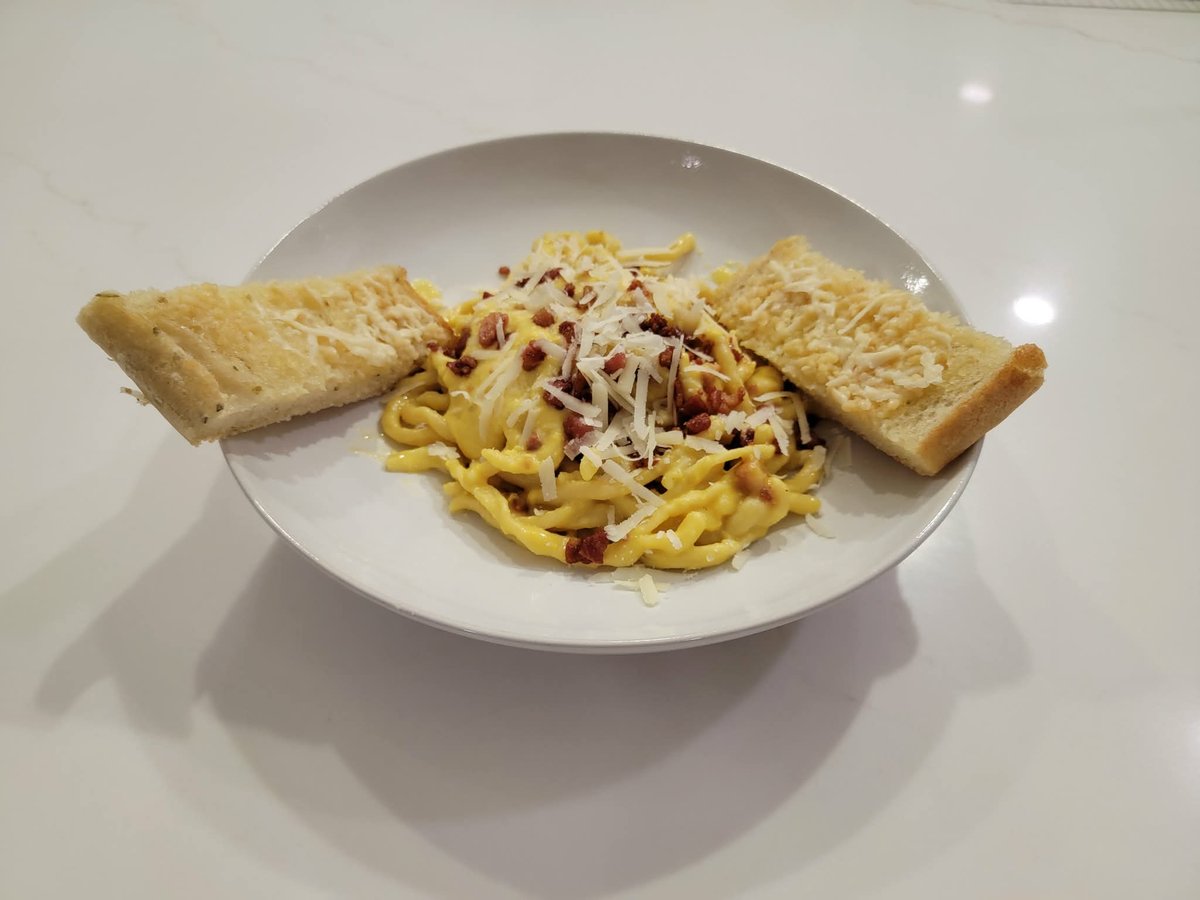
Ingredients
Notice what's NOT on this list: Cream. Butter. Garlic. Onions. Peas. If you add any of these, you're making something else. It might be delicious, but it's not carbonara.
Instructions
- Prep the guanciale. Cut it into small strips or lardons (little rectangular pieces). Don't stress about perfection—just get it into bite-sized bits. Some people like thicker chunks, some like thin strips. You do you.
- Make the egg mixture. In a bowl, whisk together the 3 egg yolks, 1 whole egg, and about three-quarters of your grated pecorino. Save the rest of the cheese for finishing. Add a generous amount of black pepper. Whisk it until it's smooth. Set it aside.
- Start the guanciale in a COLD pan. This is important. Put the guanciale in a large pan (big enough to hold all the pasta later) and THEN turn the heat to medium-low. Starting cold lets the fat render slowly without burning the meat. Cook it gently, stirring occasionally, until the fat is translucent and the edges are starting to crisp. This takes 8-10 minutes. Don't rush it.
- Meanwhile, cook the pasta. Boil a big pot of well-salted water. Cook your pasta until it's JUST under al dente—like one minute less than the package says. It'll finish cooking in the pan. BEFORE YOU DRAIN IT: Save at least 2 cups of that starchy pasta water. This is the secret weapon. The starch in that water is what makes everything come together into a silky sauce.
- This is the critical moment. Pay attention. When the guanciale is done, turn OFF the heat. Seriously, off. Remove the pan from the burner if you have an electric stove. Let it cool for about 30 seconds to a minute. If the pan is too hot, you'll make scrambled eggs. If it's too cold, the sauce won't come together. You want it hot enough to warm the eggs but not hot enough to cook them solid.
- Add the pasta to the guanciale pan. Use tongs to transfer the pasta directly from the pot to the pan (a little water clinging to the noodles is fine—good, even). Toss it around to coat it in that rendered fat.
- Add the egg mixture. Pour the egg and cheese mixture over the pasta. NOW TOSS LIKE YOUR LIFE DEPENDS ON IT. Use tongs, lift and turn, shake the pan, keep everything moving. The residual heat will gently cook the eggs while the pasta water and fat emulsify everything into a creamy sauce. If it looks too thick, add a splash of pasta water. If it looks too wet, keep tossing—it'll thicken as the cheese melts.
- Keep adding pasta water as needed. This is the "extra pasta water is key" part. The sauce should be silky and coat the noodles, not clumpy or dry. Add water a tablespoon at a time, tossing between additions, until you get that glossy, creamy consistency. It's an emulsion—treat it like one.
- Serve immediately. Carbonara waits for no one. Divide it into warm bowls. Top with the remaining pecorino and another aggressive grinding of black pepper. Eat it while it's hot because it gets sad and clumpy as it cools.
How to Not Screw This Up
- Scrambled eggs? Your pan was too hot. Next time, let it cool longer after the guanciale, or add a splash of cold pasta water before adding the egg mixture.
- Clumpy cheese? Your pan was too hot OR you didn't toss enough. The cheese needs to melt slowly into the emulsion, not seize up in hot spots.
- Too thick? More pasta water. Always more pasta water.
- Too thin/watery? You probably added too much pasta water at once. Next time, add it gradually. You can always add more, but you can't take it back.