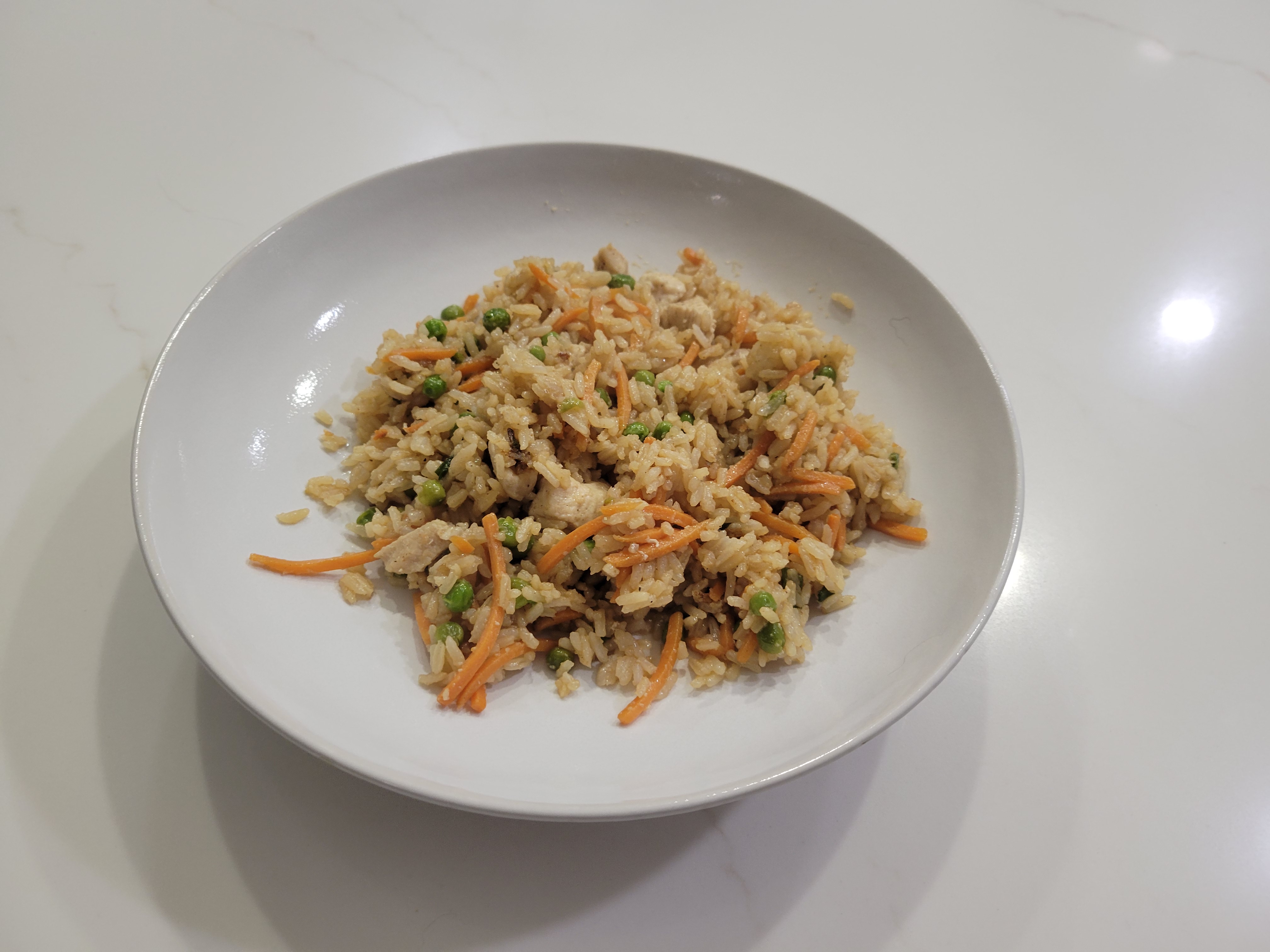
Ingredients
The Rice
The Chicken
The Wok Work
Optional
Instructions
- Cook the rice first, then get it out of the pot. Jasmine, 2 1/4 cups water, bring to a boil, cover, drop to low, ~18 minutes, let it rest 5. Then dump it onto a sheet pan and spread it out in a thin layer. It needs to cool and dry out while you do everything else. Cold, dry rice fries. Fresh hot rice from the cooker turns to paste in the wok. This is the whole game. See the callout if you don't believe me.
- Cook the chicken. Heat 1 Tbsp toasted sesame oil in a large skillet over medium-high. Add the diced chicken, 1 tsp ground ginger, salt, and pepper. Cook 5-7 minutes, tossing occasionally, until it's browned on the outside and cooked through in the middle. Dump it into a bowl and set it aside. The wok gets its own party in a minute.
- Wok time. Heat 2 Tbsp toasted sesame oil in a wok (or your biggest skillet — a real wok is nicer for tossing, but any wide pan works) over medium-high. Add the ground ginger, sliced scallions, and frozen peas. Stir until fragrant — about a minute, no more. Ground ginger burns fast and burnt ginger is bitter and there's no coming back from it. If you smell toasted instead of fragrant, you went too far. Read the ginger callout before you start this step so you know what fragrant vs. burnt smells like.
- Add the matchstick carrots. Toss for another minute or two, until they start to soften but still have crunch. You are not stewing them. You want them to bend, not surrender.
- Add the cold rice. Break up any clumps as you tip it in. Toss it around so every grain gets coated in the oil, and let it sit for a beat between tosses so the bottom crisps slightly. 2-3 minutes total. Then add 3 Tbsp of the soy sauce, toss to distribute, taste, and add the fourth tablespoon if it needs it. Different soy sauces are different strengths — that's why the range exists, not because I couldn't make up my mind.
- Optional egg — two ways. Traditional fried rice has an egg; the food is better with it; the household call is up to you. There are two moves and both are legitimate.
- Fried egg on top (the good version). While the rice is finishing, heat 1 tsp of neutral oil or butter in a small nonstick skillet over medium heat. Crack the egg in. Cook 2–3 minutes until the white is set and the yolk is still runny (sunny-side up); flip and cook 30 seconds more for over easy. Slide onto the finished plate — the runny yolk breaks over the rice and becomes part of the sauce. This is objectively the good version.
- Scrambled into the rice (the takeout version). Doing this move? Backtrack to step 5, right after the rice is coated in oil but before you add the soy sauce. Push the rice to one side of the wok. Crack 2 eggs into the empty side. Beat with the spatula and let them scramble loose but still soft — 30 seconds tops. Then fold into the rice, add the soy sauce, and continue. More egg per bite, no runny-yolk moment.
- Add the chicken back. Dump it into the wok with any juices that collected in the bowl. Toss until it's all hot again, about a minute.
- Serve immediately. Extra soy sauce on the side. Lay the fried egg on top of each bowl if you did the egg — the runny yolk over the rice is the whole point of that particular move. This does not reheat well the next day, but nobody said it did.
Sesame Oil Is the Whole Flavor. But…
Toasted sesame oil is what makes fried rice taste like fried rice. That's not decoration. That's not a "finishing touch." That's the flavor. If you use canola and season with soy sauce and wonder why it tastes like "rice with soy sauce on it," this is why. Buy a bottle of toasted sesame oil. It's like six dollars. It lasts a year in the cabinet. It is the single highest-leverage ingredient in the recipe and if you skip it you are cooking a different dish.
That said — if your broke ass can't afford sesame oil, or your kids used it all last time they made stir-fry, whatever neutral oil you've got in the cabinet works. Vegetable oil, canola, peanut, all fine. It just won't taste as sesame-y. It'll still be dinner. It just won't be this dinner. Buy the sesame oil next time.
Cold, Day-Old Rice Is the Move
Fresh hot rice out of the cooker is a wet, sticky, starchy pile of grains all glued to each other. Throw that into a hot wok and it steams instead of fries — you end up with pasted-together clumps that never crisp, and no amount of soy sauce fixes it. That's not fried rice. That's wet rice, seasoned.
Cold, dried-out, day-old rice fries beautifully. The grains are separate. The surface is dry enough to crisp in the oil. This is why every takeout place in the country uses yesterday's rice — not because they're being lazy, but because it's the correct ingredient.
If you planned ahead, use yesterday's rice out of the fridge. If you didn't plan ahead (be honest, you didn't), cook it first thing and spread it in a thin layer on a sheet pan. Thirty minutes on the counter while you prep and cook the chicken dries it out enough to work. The sheet-pan spread is the shortcut. Do not skip it.
Don't Burn the Ginger
Ground ginger goes from fragrant to burnt in about the time it takes to check your phone. One minute in hot oil. Maybe ninety seconds if the pan isn't screaming hot. If you smell "toasted" instead of "fragrant," you went too far. Burnt ginger is bitter and irredeemable — it doesn't mellow, it doesn't hide, it doesn't "work itself out" when you add the soy sauce. It just makes the whole dish taste like burnt ginger.
This is the technique cliff of the recipe. Everything else is dump-and-stir. This step is the one where being distracted for 30 seconds ruins dinner. Have the carrots ready to go in immediately after — they cool the pan down and stop the ginger from cooking further. If you burn it, start the wok step over. It's two tablespoons of oil and 90 seconds of stirring; it's not a tragedy. Serving bitter fried rice IS a tragedy.
The Egg Question
Traditional fried rice has an egg. There are two ways to do it, both correct, both in the instructions above at step 6.
Scrambled through the rice is the takeout move — push the rice to one side of the wok before the soy sauce goes in, crack 2 eggs into the empty side, beat and scramble them loose, then fold into the rice. You get egg in every bite. No runny-yolk moment. Reliable and delicious.
Fried egg on top is the better version. Objectively. I will not entertain a debate about this. A sunny-side-up egg with the yolk still runny, laid on top of the finished bowl, breaks when you cut into it and becomes part of the sauce. The rice absorbs it. Every bite gets richer. This is the good version.
My wife doesn't like it. So in this house it's optional. That's a household call, not a food call — the food is better with the egg. If you're pro-egg, do it. If you're anti-egg, or you're cooking for someone who is, don't. Neither answer is wrong. One answer is just slightly more right.