Ingredients
That's it. That's the list. Three things. And yet.
Instructions
- Put the eggs in the pot FIRST. Place your eggs in a single layer at the bottom of a pot. Then add cold water until it's about half an inch above the eggs. This is important: the eggs go in before you turn on any heat. Don't drop eggs into boiling water like some kind of chaos agent. That's how you crack shells and have egg white ribbons floating around your pot.
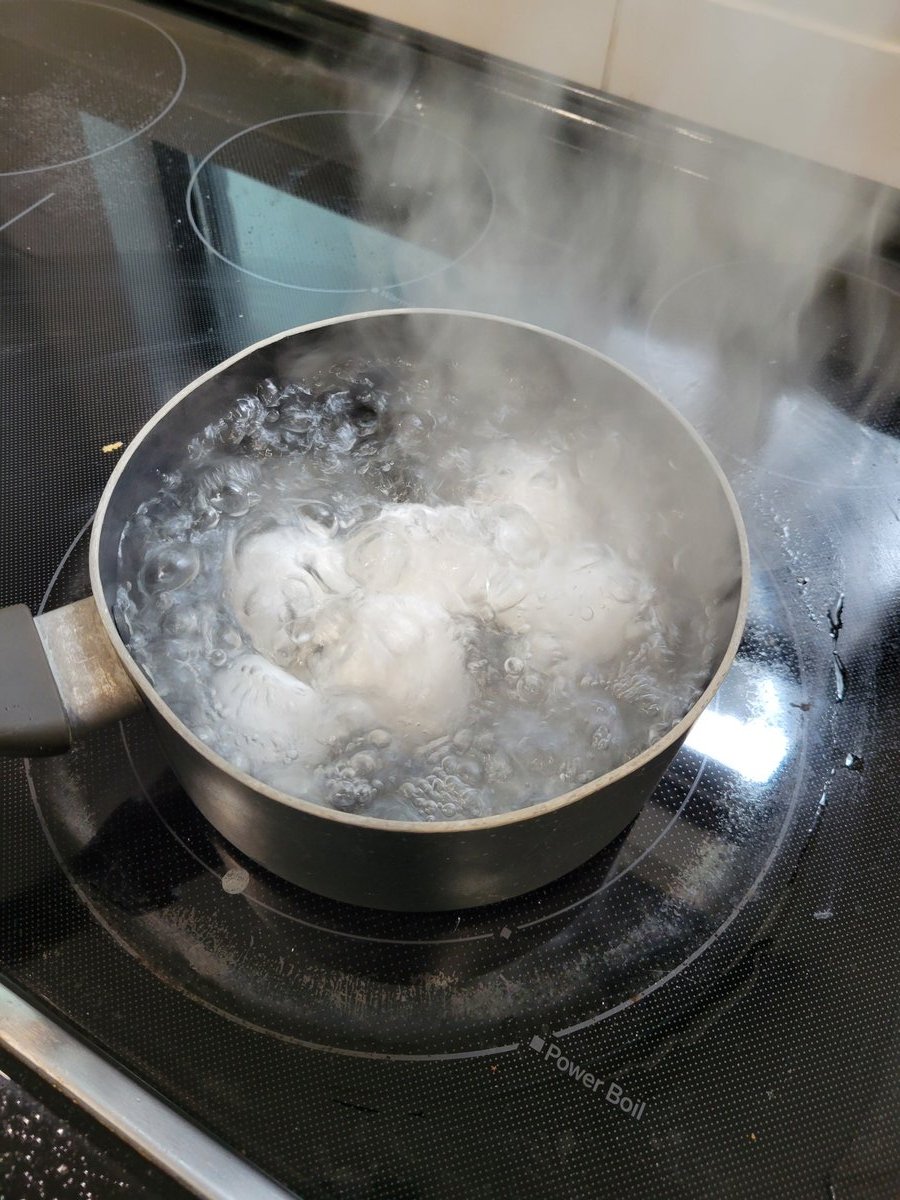
- NOW turn on the heat. Crank it to high. Just sit there and wait for it to boil. Don't walk away to "do something real quick" because you'll forget and come back to eggs bouncing around like popcorn. Watch the pot. Yes, I know the saying. Watch it anyway.
- The moment it boils, turn off the heat. As soon as you see a real rolling boil—big bubbles, aggressive energy—turn off the burner. But don't remove the pot from the burner. Leave it right there. "But won't it keep cooking too fast?" No. The residual heat is enough. The water is still hot. The eggs are still cooking. You're just not adding more energy to the system. This is the trick that keeps you from overcooking them.
- Cover and set a timer for 10 minutes. Put a lid on the pot. Set a timer. Now go do something else. Check Instagram. Scroll Twitter. Text someone back. Whatever. Just don't touch the eggs. Don't lift the lid "to check on them." There's nothing to check. They're sitting in hot water. They're fine. Leave them alone.
- Meanwhile, prepare an ice bath. Get a big bowl. Fill it with ice and cold water. This is critical and I need you to actually do this. "Can I just run them under cold water?" You can, but it's not as effective. You want them to cool down fast, and an ice bath is how you do that. Just trust me.
- When the timer goes off, move the eggs immediately. Fish the eggs out of the hot water with a slotted spoon or whatever you have and transfer them straight into the ice bath. Don't wait. Don't "let them cool for a minute first." The whole point is to stop the cooking process immediately.
- Why the ice bath matters: Without it, the eggs continue to cook from residual heat. That's how you get that nasty green-gray ring around the yolk. It's not dangerous, it's just sulfur compounds doing chemistry, but it looks like you don't know what you're doing. Which, if you're skipping the ice bath, you don't.
- Wait another 10 minutes. Let the eggs sit in the ice bath until they're completely cooled. This also makes them way easier to peel. The cold contracts the egg inside, separating it slightly from the shell. Science.
- Use them for whatever. Chef salad. Deviled eggs. Egg salad sandwiches. Protein snack. Paint them for Easter. Put them in ramen. Throw them at your enemies. This is your business, not mine. The point is: you now have properly cooked hard boiled eggs that don't look like you found them in an abandoned diner.
Troubleshooting Because You Probably Did Something
- Green ring around the yolk? You overcooked them. Either you didn't use the ice bath, or you left them in the hot water too long, or both. Follow the times. Use the ice bath. It's not optional.
- Shells won't peel cleanly? Fresh eggs are actually harder to peel. If you have the option, use eggs that are a week or two old. Also make sure you cooled them completely in the ice bath. Peeling under running water can help too.
- Yolk is still runny? That's not a hard boiled egg, that's a soft boiled egg. Which is fine if that's what you wanted. If not, your water wasn't actually boiling when you started the timer, or you didn't leave them in long enough. The 10 minutes assumes a real boil and the lid staying on.
- Cracked during cooking? You probably dropped them into water that was already hot, or your eggs were too cold from the fridge. Room temperature eggs + cold water start = no cracks.