Ingredients
Sized for one sandwich. Double, triple, whatever — the ratios don't care.
Instructions
There's barely a method here. The ingredients are the recipe. Do not overcomplicate this.
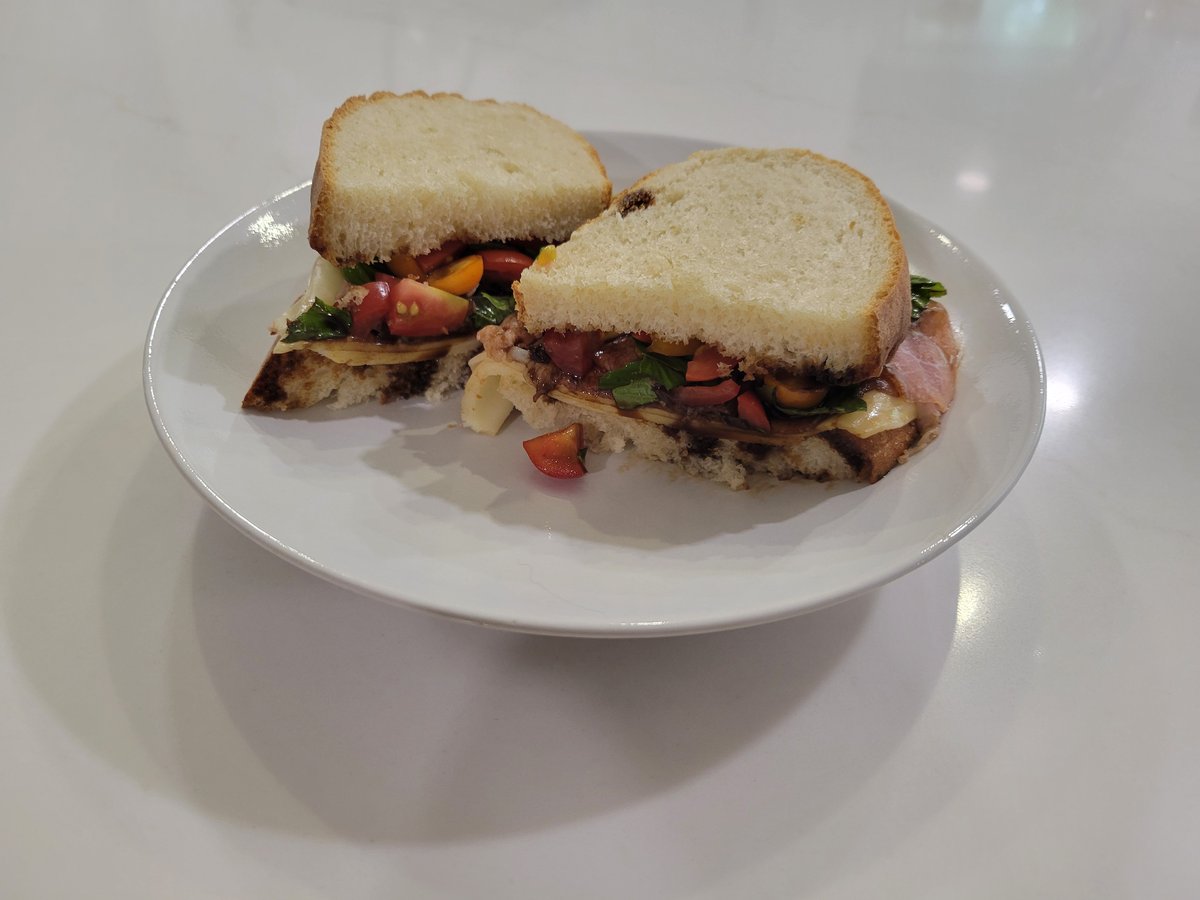
- Lightly toast the bread — optional. The photo shows a little char on the bottom crust, which means the bread got a quick pass in a grill pan or dry skillet. Do that if you want the structure. Skip it if you like it soft. Both are correct. What is NOT correct is toasting the bread until it's a crouton and shattering under fresh mozzarella like a piece of hardtack. A little color. That's it.
- Bottom slice: prosciutto first, then mozzarella. Prosciutto is the foundation — it holds up under everything else and doesn't slide around. Lay it down first and drape it like it means something. Then place the mozzarella slices on top of it.
- Add the tomatoes and the basil. Scatter the chopped Roma over the mozzarella. Tear the basil leaves over the tomato. Do not chiffonade it into ribbons like you're plating at a restaurant — tear it. It bruises less and it looks like a person made it.
- Drizzle the balsamic glaze. A generous back-and-forth zigzag across the whole assembly. Do not be shy. A polite drizzle is worse than none at all — if the glaze isn't landing on every bite, the sandwich is bland. If you're using actual balsamic vinegar instead of glaze at this point, stop and read the callout, because your sandwich is about to run down your wrist.
- Top with the second bread slice, cut in half, eat immediately. Tomatoes on bread turn to a soggy tragedy in about five minutes. This is not a make-ahead lunch. If you have to wait to eat it, keep the bread and the fillings separate until the moment before you sit down.
Fresh Mozzarella. Not the Bag.
Fresh mozzarella is the milky white ball floating in water at the cheese counter. Soft. Wet. Slightly rubbery. You slice it 1/4-inch thick and put it on the sandwich. That's the cheese. Low-moisture shredded mozzarella — the yellowish stuff in a plastic bag — is a completely different cheese. It is engineered for pizza. It melts in strings. It has almost no flavor cold. It does not belong within ten feet of this sandwich. If the “mozzarella” you just picked up comes in a bag, pre-shredded, put it back on the shelf, walk to the cheese counter, and get the real thing. It's three dollars. This isn't hard.
Real Prosciutto. Sliced Paper-Thin at the Deli.
Prosciutto di Parma or San Daniele, sliced so thin at the deli counter that you can almost see through a slice when you hold it up. That's the ingredient. Do NOT accept the pre-packaged “prosciutto” that comes in a plastic tray from the cold aisle — that is $6 of regret, sitting on a shelf, hoping you don't know any better. It's thick, it's salty in the wrong way, and it fights back when you bite the sandwich. Get in line at the deli counter, ask for it sliced fresh and thin, and eat it within a couple of days. This is the ingredient that most punishes cheaping out. If any single thing on this list is going to make or break the sandwich, it's this.
Roma Tomatoes. Chopped Small.
Same reason as pico de gallo elsewhere on this site — Romas are meatier and much less watery than slicing tomatoes. A big juicy beefsteak on a sandwich means soggy bread and tomato water running down your wrist inside two bites. Get a Roma, chop it small, and every bite will get a little tomato. Big slabs of tomato are not the flex you think they are; they slide out of the sandwich the first time you tilt it. Chop. Small.
Balsamic Glaze, Not Vinegar.
Balsamic glaze is thick, syrupy, sweet-tart, and stays where you put it. Straight balsamic vinegar is thin, pungent, and will run out of the sandwich, down the plate, and onto your shirt. These are not interchangeable. Buy the glaze — every grocery store has it in the vinegar aisle, usually in a squeeze bottle labeled “balsamic glaze” or “balsamic reduction.” Or make your own by simmering plain balsamic vinegar over medium-low heat until it reduces by about half and coats the back of a spoon — ten minutes, tops. What you cannot do is splash straight vinegar into the sandwich and call it done. Your sandwich will be fucked, and it will be entirely your fault.
Eat It Immediately.
Wet ingredients on bread equals soggy bread in about five minutes. This is not a make-ahead lunch. This is not a pack-for-the-office sandwich. This is not a “wrap it in foil and eat it at the park in an hour” sandwich. Assemble it, cut it in half, sit down, eat it. If for some reason you have to wait, keep the bread and the fillings completely separate until the moment you're ready — and even then, five minutes on the counter is your whole window before the bread starts absorbing tomato water and slumping. The clock starts the second the glaze hits the tomato.
About the Name (It's Not a Sub)
The American “Italian sub” is a great sandwich. It has a hoagie roll, layered deli meats — salami, capicola, mortadella, sometimes ham — sliced provolone, shredded iceberg, tomato, onion, sometimes banana peppers, and oil-and-vinegar. It is not this. It is not attempting to be this. Do not read this recipe and think “I'll just add some salami and lettuce” and improve it. You will not have improved it. You will have made a slightly worse Italian sub. This is the sandwich you get in Italy when you walk into a lunch spot and point at a menu you can't read. It happens to also be great. That's the whole pitch. Two different sandwiches, both correct in context, and one of them is what's on this page.