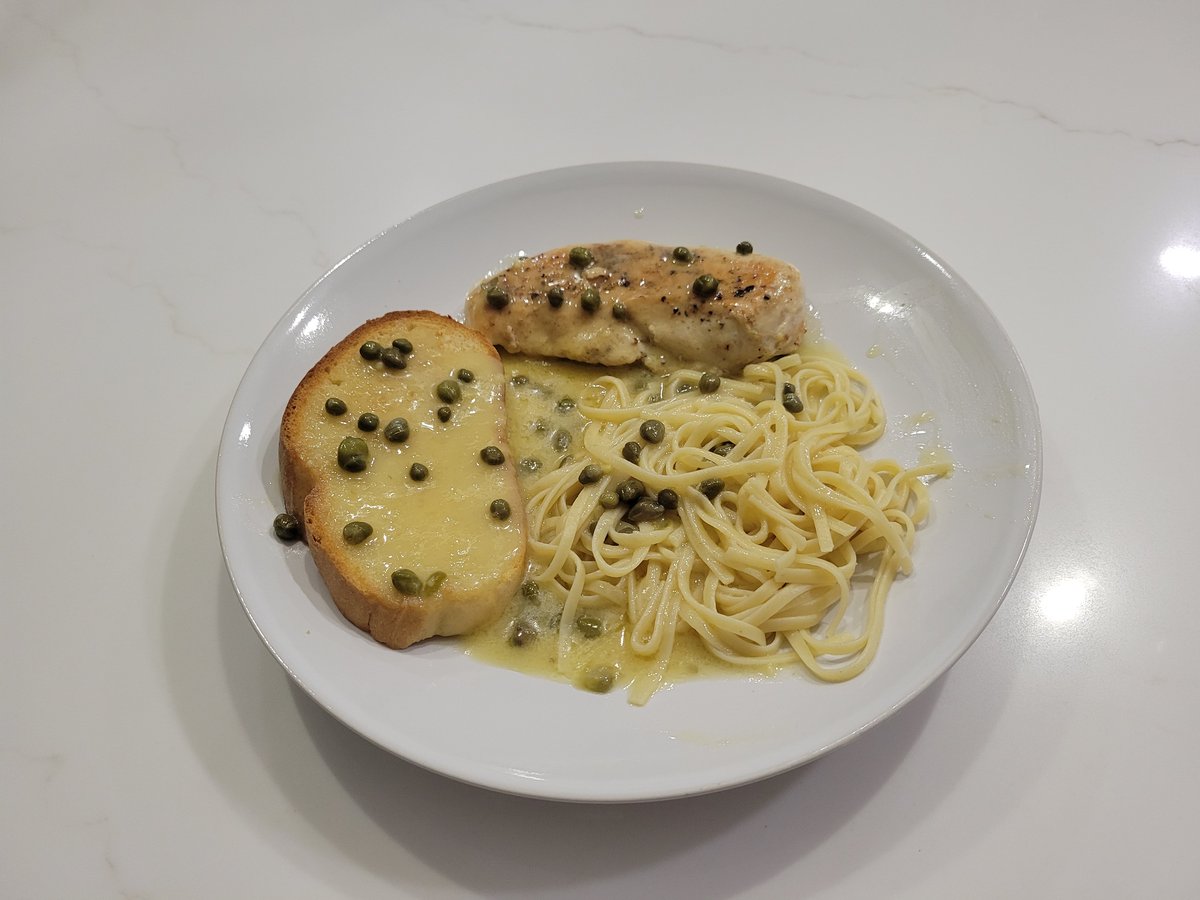
Ingredients
Instructions
- Add the stick of butter and cup of olive oil to a sauce pan on medium low heat. Anything hotter and the butter will burn and the sauce will be fucked. Medium low. Not medium. Not low. Medium low.
- Zest about half of the lemon into the sauce. More or less to taste. If you don't have a zester, use the small holes on a box grater. If you don't have either, why are you attempting piccata?
- Add the capers. The jar says to drain them. I never do. The brine adds flavor. Live dangerously.
- Pour in the white wine. Take a drink directly from the bottle. This step is very important.
- Let it simmer for about 10 minutes, stirring occasionally. This isn't the time to go check your phone for 20 minutes. Stay present.
- Squeeze in the lemon juice. Watch out for seeds unless you want a surprise crunch in your dinner. Pro tip: squeeze it into your other hand first to catch the seeds.
- Stir in the parsley right before serving. Adding it too early will make it sad and wilty. Season with salt and pepper.
- Pour it over chicken, fish, or honestly whatever you want. It's your dinner. I'm not here to judge. (I'm a little bit here to judge.)
If You Want the Sauce a Little Thicker: Make a Roux
This sauce runs on the loose side by design — it's supposed to pool around whatever you ladle it over, not sit on top like gravy. But if you want it thicker, you make a quick roux on the side and whisk it in. You do NOT dump flour straight into the sauce. More on that below.
The roux:
- 1/4 cup flour
- Half a stick of butter (4 Tbsp)
Melt the butter in a separate pan over medium low heat. Add the flour and whisk until it's fully mixed and smooth — no dry pockets, no lumps. Let it cook for a few minutes to kill the raw-flour taste; it'll smell nutty and go from pale to a light blond color. That's your roux.
Now whisk the roux into the piccata sauce a little at a time, waiting a few seconds between additions to see where you land. Stop when the sauce coats the back of a spoon the way you want it to. Discard the rest of the roux. Do not panic-add all of it; you can't un-thicken a sauce without starting over.
Why not just add flour directly to the sauce, you ask? Because if you dump flour into a hot liquid sauce, it clumps instantly into little flour-pebbles that refuse to dissolve, and those chunks taste exactly like raw flour, which is to say, like paste. The roux cooks the flour first and suspends it in fat, so when it hits the sauce it disperses smoothly instead of seizing up. The roux is the way. There is no shortcut here that doesn't ruin the sauce.