Ingredients
Instructions
- Brown the beef hard. Heat the olive oil in a wide skillet or Dutch oven over medium-high. Add the ground beef and break it up, but let it sit long enough to actually develop color on the bottom of the pan — you want real browning, not gray simmered meat. Drain off the excess fat but leave about 2 tablespoons behind. That fat is doing work in the next three steps.
- Onions, then garlic. Add the onion and cook until softened, about 5 minutes. Add the garlic and cook 30 seconds more, just until fragrant. Do not let the garlic burn. Burnt garlic is bitter and it will punish you all the way through the finished dish.
- Fry the tomato paste. Push everything to one side of the pan. Add the tomato paste to the bare fat and fry it, stirring, until it darkens to a brick red — about 1 minute. Stir in the Italian seasoning and red pepper flakes and toast another 30 seconds, then mix everything back together. This is the step people skip, or barely do for five seconds before dumping the sauce in, and then they wonder why their red sauce tastes like tomato-flavored water. Darkening the paste in fat is the difference between "red sauce" and "sauce with any depth at all." Do the minute. It's a minute.
- Build the sauce. Add the tomato sauce, beef broth, sugar, salt, and pepper. Scrape the bottom of the pan to lift the browned bits — that's flavor, don't leave it stuck to the pan. Bring to a boil.
- Add the pasta. Keep the simmer aggressive. Stir in the penne. Reduce to a strong, steady simmer — see the callout below — cover, and cook 12-14 minutes, stirring every few minutes so nothing sticks. The pasta should be al dente and the liquid reduced to a thick sauce that coats it. If it tightens before the pasta is done, add broth a splash at a time. A weak, gentle simmer here is the classic mistake: the pasta absorbs the liquid too slowly, ends up gummy, and the sauce stays thin. Aggressive, not violent. Keep an eye on it.
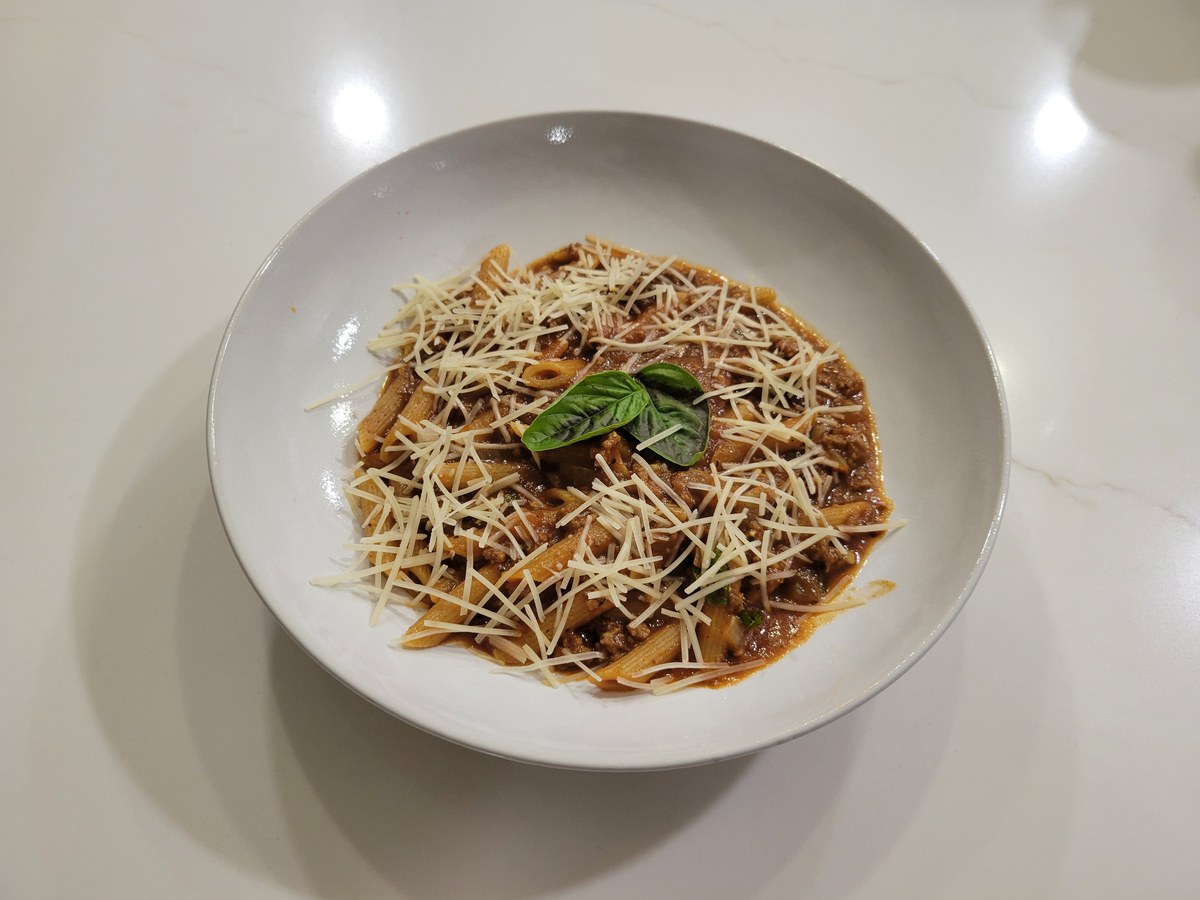
- Kill the heat. Butter, cheese, basil. Turn off the burner. Stir in the cold butter until it melts and the sauce turns glossy, then the parmesan. Fold in the fresh basil off heat so it stays bright green instead of dark and sad. These two thirty-second finishing moves — cold butter mounted into the sauce and fresh basil added off-heat — are the entire difference between "I made pasta" and "hell yeah, dinner." Skip either one and you have Hamburger Helper. Rest uncovered 5 minutes to set, then taste and correct the salt.
Keep the Simmer Aggressive
The single most common way to blow this recipe is to turn the heat down too far after adding the pasta. A weak, gentle simmer means the pasta absorbs the liquid slowly and goes gummy while the sauce stays thin and watery. You want a strong, steady bubble across the whole surface of the pan — not a rolling boil (that'll blow sauce out and cook off too much liquid), but definitely not a lazy occasional bloop. If you turn it down to "keep warm" and go check your phone for ten minutes, come back to gummy pasta and thin sauce. Set the heat, watch the pot, keep it aggressive.
The Milk Trick (If It Tastes Sharp)
Some cans of tomato sauce are more acidic than others, and if the finished dish tastes sharp or metallic on the first bite, stir in about 1/4 cup of whole milk at the end. It rounds the acid without turning the sauce creamy. Not cream. Not half-and-half. Whole milk. Do NOT try this with skim — skim milk in a hot tomato sauce just tastes like watered-down tomato sauce, which is the opposite of what you want. This is the kind of fix most home recipes don't teach because it feels weird. It works.
The San Marzano Upgrade
Swapping the 15-oz can of tomato sauce for crushed San Marzano tomatoes is a real upgrade — richer, sweeter, more depth. Add an extra splash of broth to compensate for the thicker consistency. Not required, and not a game-changer if you're not paying attention. Do it once and see if you notice. If you do, keep doing it. If you don't, save the two bucks and go back to the regular can.
Leftovers
This tightens hard in the fridge overnight — the pasta keeps drinking sauce, and by the next day it's basically a savory brick. Reheat low with a few tablespoons of water or broth splashed in and stirred as it warms. Do NOT microwave it dry: you'll end up with baked-in penne that snaps like uncooked pasta and a coating of dried sauce that scrapes off in flakes. A splash of liquid, low heat, patience. That's the whole trick.
This Is Hamburger Helper If You Gave a Shit
The pitch of this recipe is the pitch of the whole site. One pot. Thirty-five minutes. Cheap-ish ingredients you probably already have. Costs you maybe eight extra minutes over dumping a box of Hamburger Helper into a pan — and in exchange you get real dinner instead of the beige cafeteria approximation of dinner. Make this twice a week for a year instead of the box and you've spent about one extra hour of your life on cooking, total. That is the deal. Take it.